The Sales Team Hack You’re Missing
Remote work changed the insurance industry for the better, but some of the most important
November 13, 2026
Remote work transformed the insurance industry. When COVID hit, Zoom kept agents serving clients, teams connected, and businesses growing when they otherwise might have stalled.
It’s still essential today. Remote work gives agents flexibility with clients and lets agency owners build their businesses around their lives.
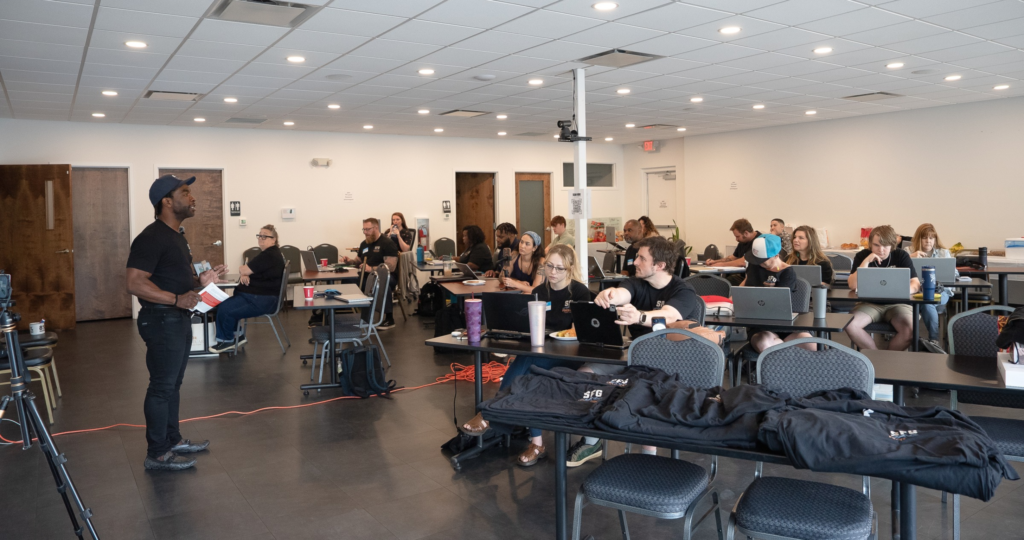
But in all the excitement around remote work, the industry lost sight of something important: some of the most valuable parts of building a sales team only happen in person.
In-person work holds agents accountable in a way that’s hard to replicate on a screen. It challenges people in ways they can’t hide from. And it opens the door to conversations, growth, and camaraderie that no video call can match.
That’s the sales team hack most teams are missing.
Most of what makes an agent better never shows up on a calendar.
It’s the quick question after a tough call. The walkthrough of an appointment that just ended. The conversation over lunch that turns into a breakthrough about where someone wants their business to go.
Remote teams lose most of those moments. Nobody schedules a meeting to ask, “How would you have handled that objection?” In an office, they just lean over and ask.
A team that works side by side gets dozens of those small coaching moments every week without anyone planning them. Over time, that adds up to faster growth, stronger skills, and more confident agents.
Every successful agent learns this business through roughly the same progression.
First, you watch. You sit next to a mentor while they dial and run appointments, and they explain the why behind every move.
Then, you help. You take the opener, pull the leads, and take notes during the appointment. Your mentor still owns the outcome, but you’re getting hands-on experience.
Then, you do it with support. You run the appointment yourself with your mentor nearby, and you debrief right after.
Finally, it becomes second nature. Your mentor steps back to occasional check-ins, and eventually, you become the one someone else is sitting beside.
Every one of those steps works better in person. It’s hard to learn by watching a screen share, and it’s nearly impossible to have someone “right beside you” when they’re in a different city on a different call.
There’s one moment in that progression that makes or breaks new agents: the first time they’re doing it on their own.
The no-shows. The rejections. The week with no apps. The confidence they had on day one starts to fade, and they begin wondering whether they’re cut out for this.
This is where too many good agents quit. Not because they lacked talent, but because they didn’t have support at the moment they needed it most.
It’s also the stretch that’s easiest to miss remotely. On a video call, it’s easy to turn the camera off and say “I’m good.” In an office, a good leader can see the signs: an agent going quiet, filling time with busywork instead of dialing, or showing up a little later and leaving a little earlier.
Leaders can only respond to the signals they can see.
When an agent hits that hard stretch, three things make the biggest difference. All three are easier to deliver in person.
Time. Both informal and formal. Informal looks like a leader stopping by a desk, grabbing lunch, or asking how the last call went. Formal looks like a one-on-one business plan review. Agents need both, and the informal kind happens far more naturally when people share a space.
Vision. In the short term, that means focusing on the next appointment and this week’s activity goals. In the long term, it means remembering why they started and what the next 12 months can look like if they stay the course.
Specific encouragement. “Good job, keep going” doesn’t carry much weight. “Your opener on that last call was so much tighter than it was on Monday” does. That kind of feedback only comes from someone who’s actually watching the work.
This isn’t only about new agents.
Strong producers often hit the same wall the first time they start recruiting and leading. They’re confident selling, but now they’re learning a brand new skill and find themselves right back in that uncomfortable place.
New skill, same struggle. Even top producers benefit from someone in the room, just for different reasons.
Whether you’re brand new or looking for your next opportunity, it’s worth asking how an agency supports agents through the hard parts. A few things to look for:
At The Pritchett Agency, that’s why every agent is paired with a personality-matched mentor, gets a personalized business plan, and has access to a virtual office that runs every day. And wherever possible, we encourage our teams to work side by side.
Working together in person doesn’t have to happen every day, and it doesn’t have to replace flexibility. But having a place where a team can work side by side, learn from each other in real time, and catch each other before they quit is one of the simplest advantages a sales team can have.
It’s how you build agents who last.
Ready to join a team that sits beside you?

Remote work changed the insurance industry for the better, but some of the most important
Passive income in life insurance isn’t a permanent vacation. Here’s what it actually looks like

Former engineers, teachers, truckers, and parents. Life insurance agents come from everywhere. Here’s why your